
Brad Grant

TL;DR: Here’s What You Need to Know
Governance costs are real. You trade flexibility, speed in decision-making, and the comfort of bending rules. But what you gain is consistency that becomes your competitive advantage. By Month 12, that consistency translates to market recognition. By Month 24, it’s built an authority moat that competitors can’t replicate overnight.
Every team that pays governance costs early tells me it was worth it. Every team that tried to stay flexible ended up paying 10 times more in rewrite costs later.
The choice isn’t whether to pay governance costs. It’s whether you pay them upfront through discomfort, or later through crisis.
The Real Concern: Why Governance Costs Feel Restrictive
I know what you’re thinking. Governance costs sound like you’re trading away the things that matter. A content operating system sounds restrictive. Governance sounds like control. And when someone tells you that you can’t bend the rules—even for one situation that genuinely seems special—it feels limiting.
That feeling is legitimate. It should be there.
The tension you’re sensing is real: you need consistency, but you also need flexibility. You need rules that hold, but you also need room to adapt when circumstances change. That’s not a weakness. That’s the mark of someone who understands that business is complicated.
So let me be direct about what governance costs actually demand from you. Because if I tell you only about the gains, I’m not being honest. And you won’t trust what I say about the hard choices.
Here’s what governance requires you to give up: the ability to make exceptions. The power to say, “This situation is different, so we’ll bend the rules just this once.” The comfort of flexibility when pressure comes. The CEO’s request for a slightly warmer tone on that important announcement—the guide that says “maybe,” replaced by a system that says “no.”
That’s the cost. It’s real. And it matters.
The First Cost: Saying No to Flexibility
When you implement a content operating system with governance costs built in, you’re choosing enforcement over adaptation. And enforcement means refusing requests that would normally sound reasonable.
Let me paint a realistic scenario. Your CEO is preparing an important investor relations announcement. The board is going to see this. The stakes feel high. She comes to you and says: “I need this one piece to sound slightly different. Warmer. More approachable. We’re asking investors to trust us with their capital. Can we bend the voice just this once?”
It makes business sense. The request comes from the top. The reasoning is sound. And the governance system blocks it. “No. This is the voice. It applies here.”
That feels bad in the moment. Your CEO might be frustrated. You might be frustrated. Flexibility would feel like the generous choice, the one that shows you understand business nuance.
But here’s what I’ve observed: the moment you say yes to that exception, you’ve set a precedent. The next person sees that precedent and thinks, “If they did it for the CEO, why not for me?” Three months later, a marketing manager wants to adapt the voice for a campaign targeting Gen Z. Six months later, a product team wants something slightly different for their landing pages. By the time you’ve made five exceptions, nobody remembers why the governance rules existed in the first place.
A content operating system won’t let you make that first exception. It doesn’t care how reasonable the request sounds. It doesn’t care about circumstances. It doesn’t negotiate. It just holds the line.
This costs you flexibility. That’s the honest trade-off.
The Second Cost: Speed in Decision-Making (and the Discomfort of That)
Governance also costs you something that teams don’t talk about much: the speed and comfort of deciding in the moment.
With a style guide, you can move fast. Someone wants to adapt the voice for a specific campaign? You discuss it, weigh the pros and cons, make a decision. It feels responsive. It feels collaborative. It feels like progress.
With a content operating system, that same request hits a wall immediately. No discussion. No “let’s think about this.” No room for the nuance that you know exists. Just a structural boundary that says: this decision was made upfront, and it doesn’t change based on circumstances.
That creates friction. Real friction. Especially for teams used to moving fast and iterating based on what’s working.
The system doesn’t speed up decision-making in the moment. It actually slows you down—because you can’t just decide to bend the rules. The rules are baked into the infrastructure. You have to live with them, even when they feel inconvenient.
I’ll be honest: this one bothers me sometimes too. There’s a part of me that wants to say yes to the reasonable exception. That wants to move fast and iterate. That wants the flexibility to adapt when circumstances change.
But I’ve learned that wanting speed and needing consistency are two different things. You can have one. But governance costs means you’re choosing consistency.

The Third Cost: The Discomfort of Being Held to Your Decisions
Here’s something most organizations don’t name: choosing governance means you have to live with your decisions. Fully. Completely. With no escape hatch.
If you define your brand voice in Month 1, that definition persists. It applies in Month 3 when the trend shows up and everyone thinks you should sound different to stay relevant. It applies in Month 6 when a new team member joins and wants to interpret it in a way that feels more modern. It applies in Month 12 when the market shifts and you wonder if your voice is still the right choice.
You don’t get to revise your decision based on what feels right in the moment. You committed to consistency, and consistency means the same voice across time, across circumstances, across pressure.
That’s uncomfortable. Because business changes. Opportunities emerge. Pressures arrive. Trends show up and make you think, “Maybe we should sound different now.”
And a content operating system won’t let you bend. It holds you to what you committed to. And that requires a kind of conviction that most teams find genuinely uncomfortable.
The Recognition: What Governance Costs Actually Reveal
I’m telling you this because I want you to see the choice clearly. Governance costs aren’t metaphorical—they’re real. They cost flexibility, they cost the comfort of fast decisions, and they cost the ability to adapt when pressure comes.
But here’s what I’ve learned watching teams make this choice: the ones who choose governance don’t regret it. Not because the cost goes away. But because they realize they weren’t actually giving up anything that mattered.
They thought they wanted flexibility. What they actually wanted was consistency. And consistency requires refusing flexibility.
They thought they wanted fast decision-making. What they actually wanted was clarity. And clarity requires decisions that stick—even when they’re uncomfortable.
They thought they wanted room to adapt. What they actually needed was certainty that their brand voice wouldn’t dissolve the moment pressure arrived.
The cost is real. The discomfort is real. But what you gain—and what I’m going to walk through in the next section—turns out to be worth far more than what you’re giving up.
What Governance Costs Actually Buy You: Consistency as Asset
So you’ve felt the weight of what governance costs. You understand that you’re trading flexibility for something else. Now let me show you what that something else actually is—because it’s more valuable than most teams realize.
When you choose governance costs as the price you’re willing to pay, what you’re actually buying is consistency that compounds. Not consistency that feels good in the moment. Not consistency that makes everyone comfortable. But consistency that becomes your competitive advantage.
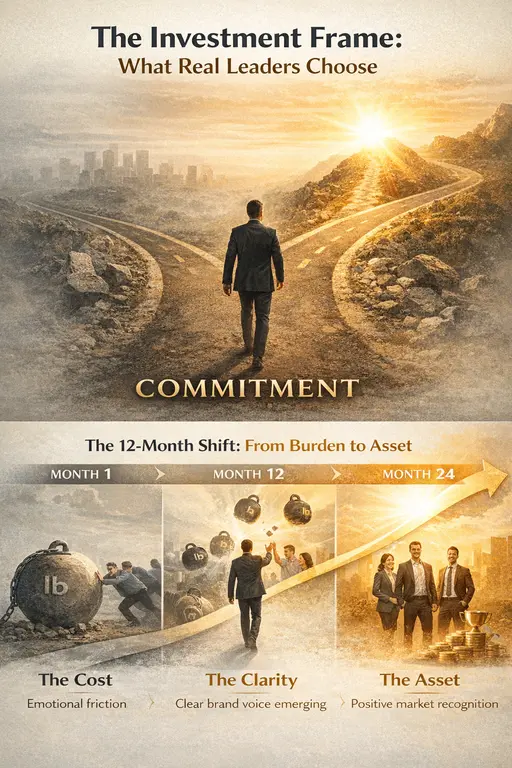
By Month 6, your voice is recognizable. Not just internally—in the market. People start noticing that your content sounds like you. By Month 12, that consistency has become a brand asset. By Month 24, competitors are still trying to figure out what you did differently while you’re already capturing market position through sheer voice clarity.
That’s what governance costs actually buy.
The Consistency Advantage: Beyond Brand Recognition
Here’s what I’ve observed: consistency doesn’t just feel good. It performs. It compounds.
When your voice stays consistent across every piece of content, something shifts. Readers start to recognize you. Not just consciously—they begin to associate your voice with trust, clarity, authority. Your content starts to feel intentional because it is.
More importantly, consistency creates something I call “brand clarity in search.” When Google’s algorithms analyze your content, they see patterns. They see a voice that’s coherent across time. They recognize an entity—not just a company publishing random content, but a recognizable voice with consistent perspective.
That entity recognition translates to search visibility. It translates to higher click-through rates because people recognize your voice in search results. It translates to better engagement because your audience knows what they’re getting.
This is what governance costs actually enable: you stop competing on volume and start competing on recognition. Your voice becomes your moat.
Brad’s Insight: The teams that succeed with governance costs don’t think about it as restriction. They think about it as investment. You’re investing Month 1 discomfort for Month 12 and Month 24 returns. That’s a good trade if you see it clearly.
The Cost Avoidance: What You Don’t Have to Pay Later
But there’s another gain that matters just as much: what you don’t have to pay.
I worked with an agency client—let’s call them BrandCo—that had gone the style guide route. Beautiful guide. Well-written. Professional. They had four content writers, all experienced, all committed to consistency.
By Month 8, they had drifted. Not drastically. But noticeably. One writer interpreted “authoritative” as corporate. Another interpreted it as expert. A third saw it as commanding. The guide existed. Everyone had read it. But interpretation had created divergence.
By Month 16, they realized the problem was bigger than they thought. Their voice across 200+ pieces of content didn’t sound like one organization—it sounded like three different ones. They had to rewrite. Not edit. Rewrite. We’re talking about 150-200 hours of work. Three full-time people for a month. Or $25K-$40K in contract writer costs.
If they’d chosen governance costs upfront—if they’d refused the first three exceptions and held the line—that rewrite would never have happened. Research on content operations cost of ownership shows that rewriting drifted content costs significantly more than prevention, which is exactly what BrandCo discovered.
The math:
- Governance costs in Month 1: The discomfort of saying no. Zero dollars.
- Rewrite costs in Month 16: $25K-$40K. Hundreds of hours lost.
The choice isn’t between comfort and discomfort. It’s between discomfort now and crisis later.
The Table: What Governance Costs Actually Cost vs. What You Gain
| What You Give Up | What You Get In Return | The Trade-Off |
| CEO flexibility for exceptions | Consistency as competitive asset | Worth it—consistency compounds, flexibility degrades |
| Speed in decision-making | Clarity in execution | Worth it—clarity prevents costly rewrites |
| Comfort of bending rules | Brand authority that grows with time | Worth it—authority lasts, comfort is temporary |
| Quick adaptation to trends | Entity recognition in search | Worth it—trends fade, recognition persists |
| The option to change your mind | Decisions that compound in value | Worth it—compound value beats optionality |
According to detailed cost analysis, implementing governance structures reduces long-term operational expenses by preventing the escalating costs of brand inconsistency management. This is why the trade-off in the table above favors governance costs.
Why Governance Costs Make Sense for Leadership
Here’s the honest truth: governance costs actually solve a leadership problem that most teams don’t name.
As a CEO or leader, you can’t be in every content meeting. You can’t weigh in on every decision. You need your team to make good decisions without you. Governance costs gives you that. It removes the burden of decision-making from people and puts it into structure. With governance costs built into the system, the decision is already made. No one has to weigh the exception. The system handles it. Content governance systems have been shown to increase ROI by automating decision-making and reducing the burden of exception management, which frees your team to focus on creating great content instead of debating whether they should break the rules.
With a style guide, every exception requires judgment. Someone has to decide: is this exception reasonable? Should we bend the rules? That’s decision fatigue. That’s politics. That’s inconsistency.
With governance costs built into the system, the decision is already made. No one has to weigh the exception. The system handles it. Your team can focus on creating great content instead of debating whether they should break the rules.
Brad’s Insight: The CEOs I’ve worked with who embraced governance costs did it because they realized it was actually reducing their workload. They weren’t losing control—they were automating decision-making in a way that freed them to focus on strategy instead of exception management.

The Real Gain: Authority That Persists
The deepest gain from paying governance costs is something most teams don’t anticipate: your content starts to build authority that doesn’t fade.
A one-off viral piece gets attention and then disappears. A trend-chasing campaign capitalizes on a moment and then becomes irrelevant. But consistent voice—the kind that governance costs creates—builds something that lasts.
When you show up with the same voice, the same perspective, the same commitment over months and years, your audience begins to trust you. Not just like you. Trust you. That trust translates to better engagement, better conversions, better loyalty.
This is the compound effect of governance costs. You’re not just maintaining consistency. You’re building authority that grows stronger with time. When you show up with the same voice, the same perspective, the same commitment over months and years, your audience begins to trust you. Enterprise content governance models show that consistency compounds in value over time, with ROI acceleration between months 12-24 as brand authority becomes recognizable and defensible.
The Moment When Governance Costs Becomes Obviously Worth It
I’ve watched teams come to this realization at different points. Some get it by Month 9. Others take until Month 18. But they all arrive at the same conclusion: the discomfort of governance costs was worth it.
They realize they’re not working harder. They’re working more efficiently because decisions are built in.
They realize their brand is more recognizable because they committed to a voice and stuck with it.
They realize they didn’t have to do the massive rewrite that would have cost them $30K and six weeks of time.
And they realize that governance costs wasn’t actually about restriction. It was about investment.
Brad’s Insight: When someone asks me if governance costs are worth it, I tell them what I’ve observed: every team that paid the cost tells me it was worth it. Every team that tried to avoid it by staying flexible ended up paying 10 times more later. The choice isn’t whether to pay governance costs. It’s when—and whether you pay them early or late.
FAQ: Your Real Questions About Governance Costs
Q: What if our business changes and we need a different voice?
You don’t. And here’s why: a strong brand voice isn’t tied to trends or market moments. It’s tied to who you are as an organization. If your business fundamentally changes (acquisition, pivot, rebrand), then yes, your voice might shift. But that’s a deliberate choice made once—not constant adaptation.
Brad’s Insight: I’ve worked with teams that thought they needed to sound different to stay relevant. What they actually needed was to deepen their existing voice, not abandon it.
Q: Isn’t governance costs just another way of saying “inflexible”?
No. Inflexibility means you can’t change anything. Governance costs means you made one decision about your voice and committed to it. You can change everything else—your strategy, your channels, your audience focus. But your voice stays consistent because that’s your brand asset.
Q: How do we communicate governance costs to the team?
Honestly. Tell them: “We’re building consistency that compounds over time. That means we’re saying no to exceptions, even when they sound reasonable. Here’s why that matters.” Teams respect clarity more than comfort.
Q: What if the CEO still wants exceptions?
Then you’re not actually implementing governance costs—you’re implementing style guides with exceptions. And you already know how that ends. If governance costs are worth implementing, they’re worth implementing all the way. That conversation with the CEO needs to happen upfront.
Q: How long before we see the value?
Six months for internal clarity. Twelve months for market recognition. Eighteen months for competitive advantage. Governance costs require patience.
Key Takeaways: What You Should Remember
1. Governance Costs Are the Price of Consistency You can’t have consistency that compounds without paying the cost of refusing flexibility. That’s structural, not motivational.
2. The Cost Is Upfront, The Gain Is Compound Discomfort now (Month 1). Recognition later (Month 12). Authority that persists (Month 24+). That’s the timeline.
3. The Real Comparison: Discomfort vs. Crisis You can feel the discomfort of saying no to exceptions now. Or you can feel the crisis of rewriting 200+ pieces of content later. One costs you emotional friction. The other costs you $25K-$40K and weeks of time.
4. Governance Costs Solve a Leadership Problem You can’t be in every decision. Governance costs puts decision-making into structure, which frees you to focus on strategy.
5. Consistency Becomes Your Competitive Advantage After 12 months, your voice is recognizable. After 24 months, it’s your market position. Competitors trying to catch up can’t—because consistency takes time to compound.
6. The Alternative Always Costs More Style guides with flexibility feel better in the moment. They always cost more in the long run. This isn’t opinion—it’s pattern.
7. Every Team That Committed Says It Was Worth It I haven’t worked with a single team that paid governance costs and regretted it. The ones with regrets are the ones that tried to stay flexible.
The Real Choice: Discomfort or Crisis
Here’s what I want you to understand: governance costs aren’t punishment. They’re investment. You’re investing in clarity now so you don’t have to invest in reconstruction later.
The teams that understand this—that see governance costs as the price of building something lasting—are the ones that succeed. They don’t love the restrictions. But they understand why the restrictions matter.
They realize that flexibility feels good until it doesn’t. Until you’re looking at 200+ pieces of content that don’t sound like each other. Until you’re calculating the cost of the rewrite. Until you understand what governance costs actually prevented.
That’s when governance costs becomes obviously worth it.
What’s Next: Understanding the Complete Framework
You now understand what governance costs actually are—not just the price, but the payoff. You see why consistency requires refusing flexibility. You understand the timeline and the trade-offs.
But understanding governance costs in isolation is only part of the picture. To see the complete framework of how a content operating system works—to understand what it actually governs, how consistency compounds into market position, and how entity authority builds—you need the full context.
Read the complete Content Operating System article to understand:
- What a content operating system actually is (and why it’s infrastructure, not a tool)
- What it governs across your entire operation
- Why refusing exceptions is the only answer that works
- How consistency compounds over time into competitive advantage
This article gave you the cost. The pillar article shows you the system.
Also explore:
- Why Style Guides Fail — Adam shows you the structural reason guides can’t enforce consistency. Understand the problem so you can appreciate the solution.
- See the Timeline — Chris walks you through what happens Month 1 through Month 24 when you implement governance costs properly. The compound effect becomes undeniable.
About Brad Grant
Brad Grant is an executive coach, leadership developer, and strategist who’s spent over a decade helping ambitious brands and leaders find clarity in their own vision. As Chief Client Officer at Response Generators, he works directly with entrepreneurs and organizations that are trying to build something real—something that compounds instead of plateaus.
His tagline says it all: “Most content fills space. Yours should create momentum.”
Brad’s background is uniquely positioned for understanding what consistency actually requires. He’s built companies from scratch (founding Granting Space Coaching), led teams through transformation, and spent years coaching executives through the hardest leadership decisions.
That experience has taught him something most people don’t easily understand: clarity doesn’t come from having all the answers. It comes from seeing your situation more clearly than you saw it before.